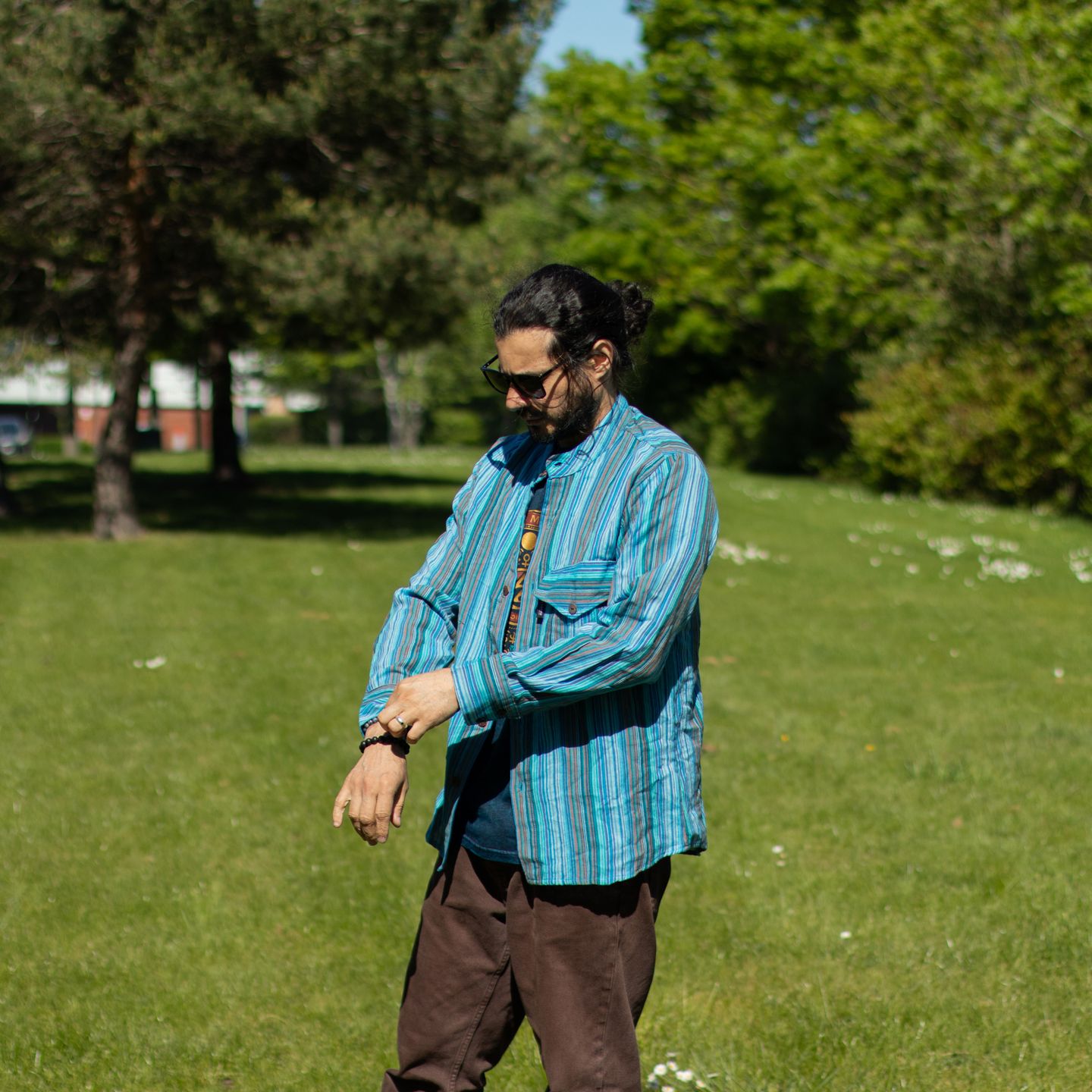
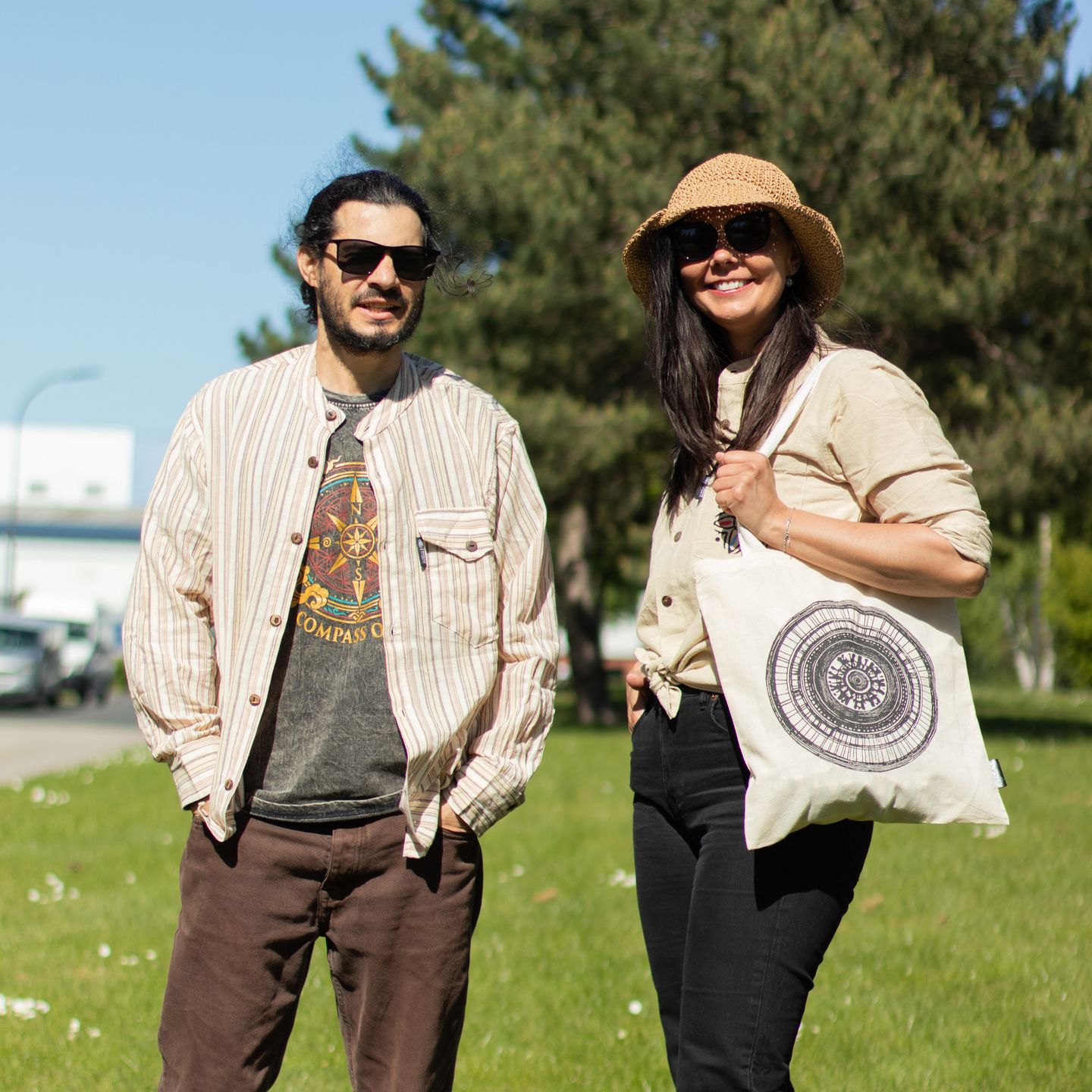
A shirt with a long selling season – wear it buttoned on its own in warm weather or open over a T-shirt when it turns cooler, giving it far more selling time than the average summer shirt.
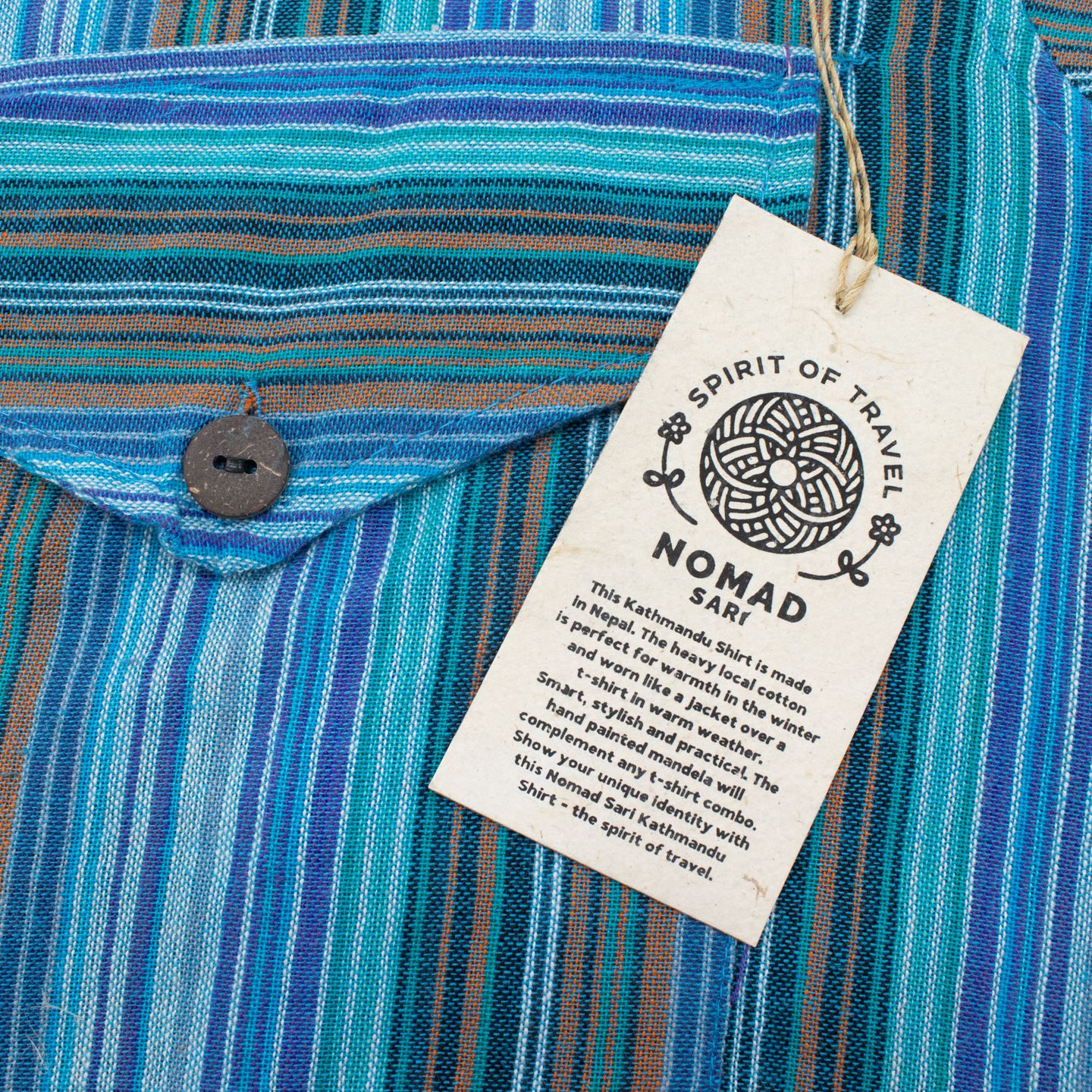
Proper Kathmandu-made clothing – handcrafted in Nepal from 100% breathable cotton, with the relaxed collarless cut that customers recognise as the classic grandad shirt.
Hippie-trail heritage – these shirts carry on the meeting of East and West that began when overland travellers reached Kathmandu in the 1960s and 70s and took to Nepal’s comfortable cotton clothing.
Comfort customers can feel – lightweight natural fabric and an easy-going shape make them comfortable for holidays, festivals, travelling and ordinary everyday wear.
Not only for hippies – they appeal to festival-goers, travellers and alternative dressers, along with customers who simply want a comfortable cotton shirt with a bit of character.
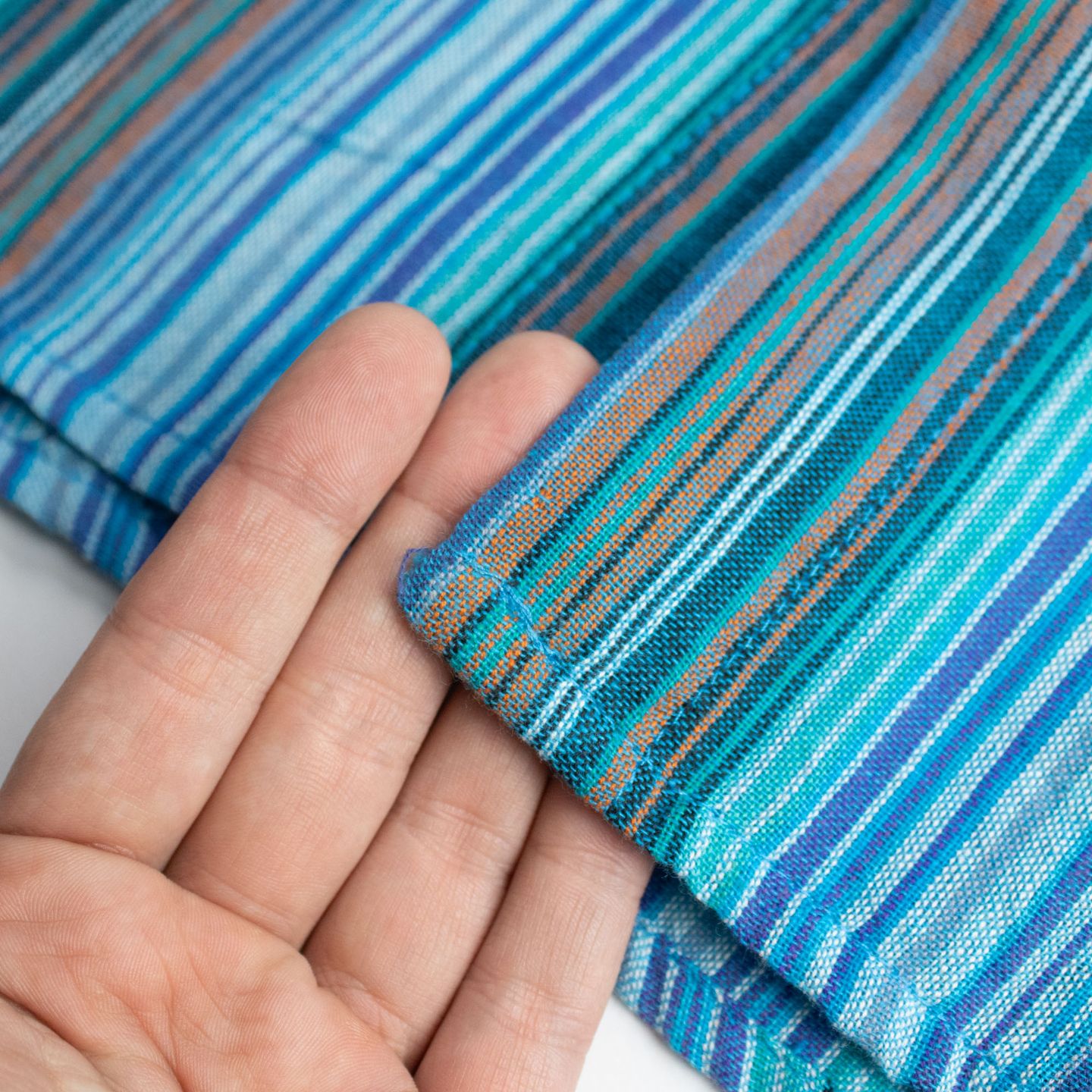
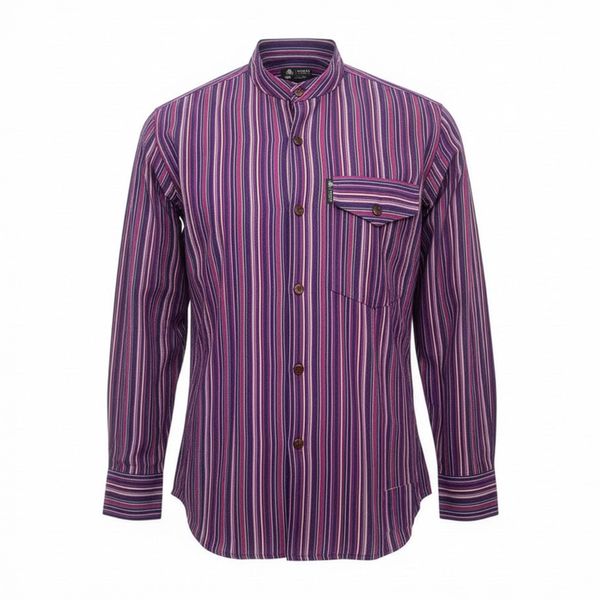
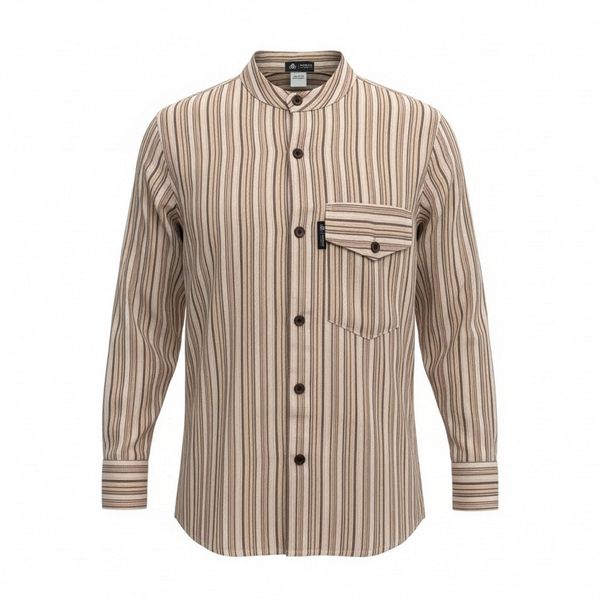
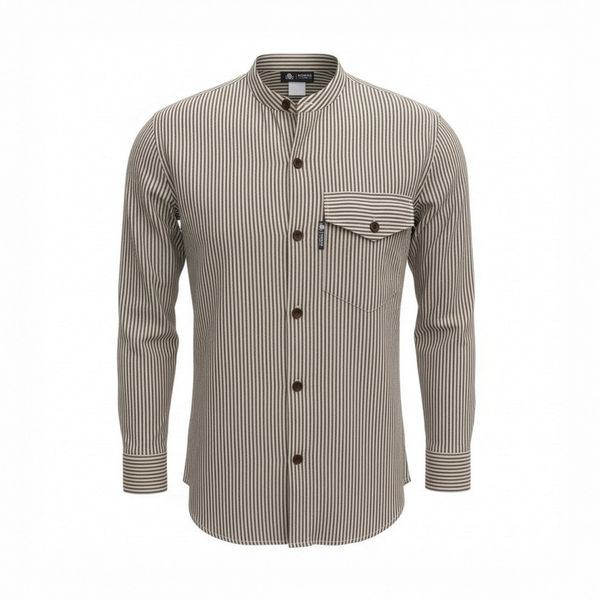
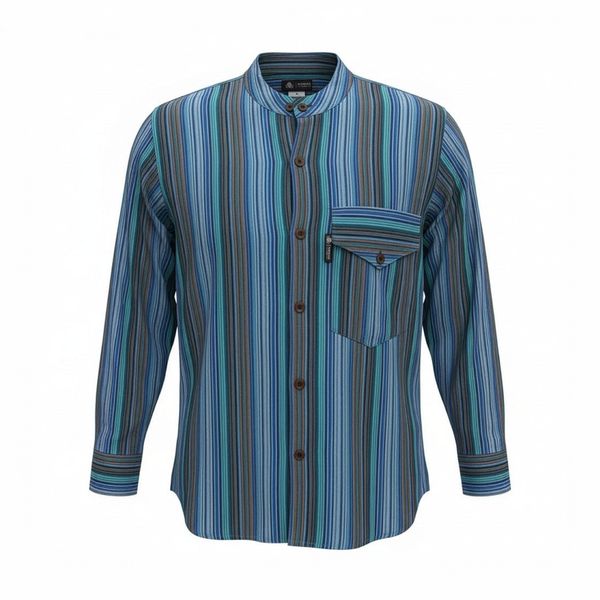
Strong on the rail – rich stripes, earthy colours and artisan detailing provide an attractive mix of quieter and more colourful choices without looking mass-produced.
A story the high street cannot easily copy – genuine Kathmandu origin and small-workshop character give independent retailers something interesting to talk about and customers something worth remembering.
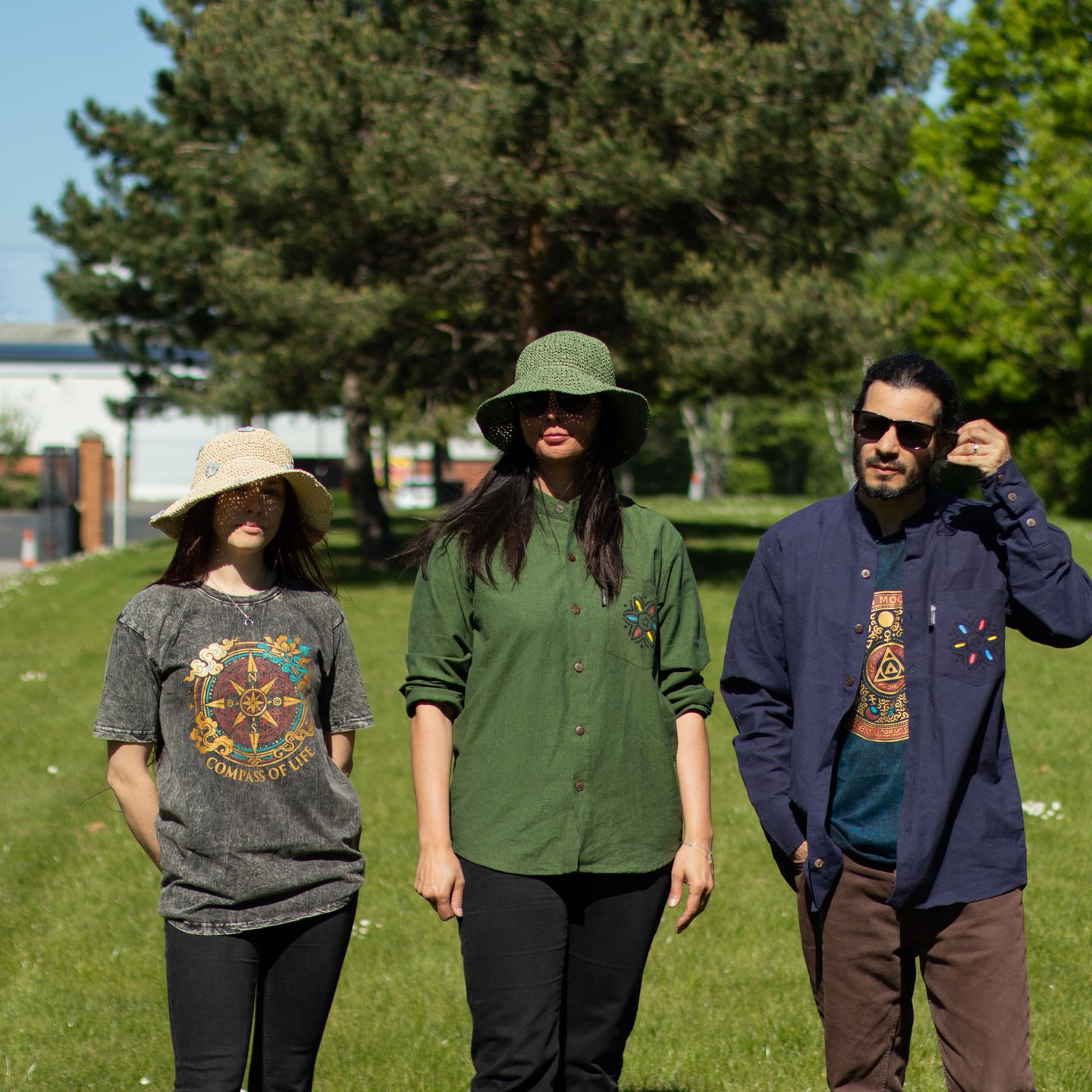
Easy to merchandise – display one buttoned and another open over a plain T-shirt; the two different looks are immediately understood and help customers picture how they would wear it.
A sound wholesale clothing line – imported directly from Nepal with an attractive RRP and room for retailer margin.A shirt with a long selling season – wear it buttoned on its own in warm weather or open over a T-shirt when it turns cooler, giving it far more selling time than the average summer shirt.
Proper Kathmandu-made clothing – handcrafted in Nepal from 100% breathable cotton, with the relaxed collarless cut that customers recognise as the classic grandad shirt.
Hippie-trail heritage – these shirts carry on the meeting of East and West that began when overland travellers reached Kathmandu in the 1960s and 70s and took to Nepal’s comfortable cotton clothing.
Comfort customers can feel – lightweight natural fabric and an easy-going shape make them comfortable for holidays, festivals, travelling and ordinary everyday wear.
Not only for hippies – they appeal to festival-goers, travellers and alternative dressers, along with customers who simply want a comfortable cotton shirt with a bit of character.
Strong on the rail – rich stripes, earthy colours and artisan detailing provide an attractive mix of quieter and more colourful choices without looking mass-produced.
A story the high street cannot easily copy – genuine Kathmandu origin and small-workshop character give independent retailers something interesting to talk about and customers something worth remembering.
Easy to merchandise – display one buttoned and another open over a plain T-shirt; the two different looks are immediately understood and help customers picture how they would wear it.
A sound wholesale clothing line – imported directly from Nepal with an attractive RRP and room for retailer margin.





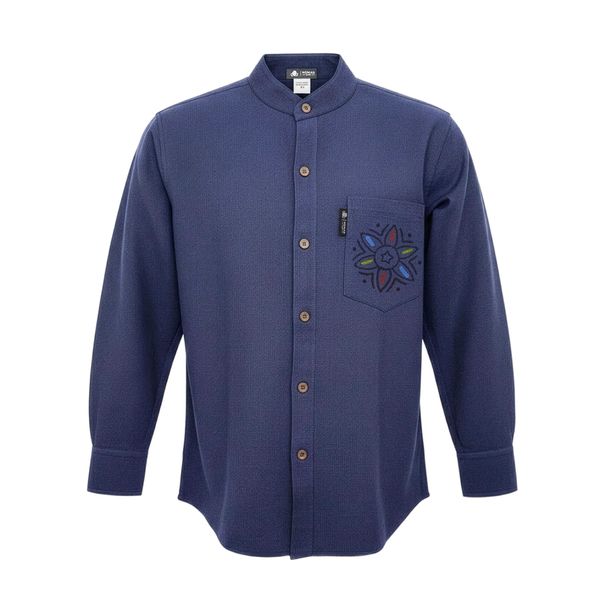

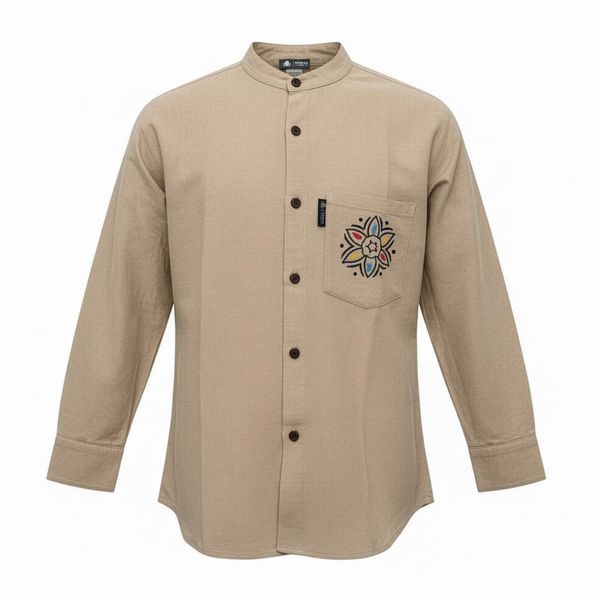

The hippies who rolled into Kathmandu in the late 1960s and 70s may not have carried fashion diplomas, but they certainly arrived with ideas. After months travelling overland, they knew what they wanted: clothes that were loose, cool, easy to wash and comfortable enough for another long bus ride.
Kathmandu’s tailors supplied the more important half of the partnership—the skill, the available cotton fabrics and generations of experience cutting relaxed, collarless clothing.
The story goes that travellers began asking for local kurtas to be shortened, pockets to be added and the shape made a little more like a familiar Western shirt. Tailors experimented with striped and plain cottons from the bazaars, adding buttons, deeper colours and practical details.
East met West over a cutting table, and the Kathmandu grandad shirt began its long journey home.
No single designer can really claim the grandad shirt. It grew out of conversations across cutting tables and market stalls: one part Nepali kurta, one part old European work shirt and one part the wardrobe of somebody who had been living from a rucksack since Istanbul.
Travellers wore them home. The more enterprising ones carried a few extras to sell at festivals and weekend markets. Before long, the Kathmandu shirt had become part of the Western bohemian look—a genuine fusion created through travel rather than in a fashion office.
That relaxed spirit remains in today’s Nomad Sari shirts. The breathable cotton feels good worn buttoned on its own during warmer weather, while the easy cut leaves room for a T-shirt underneath when the day turns cooler.
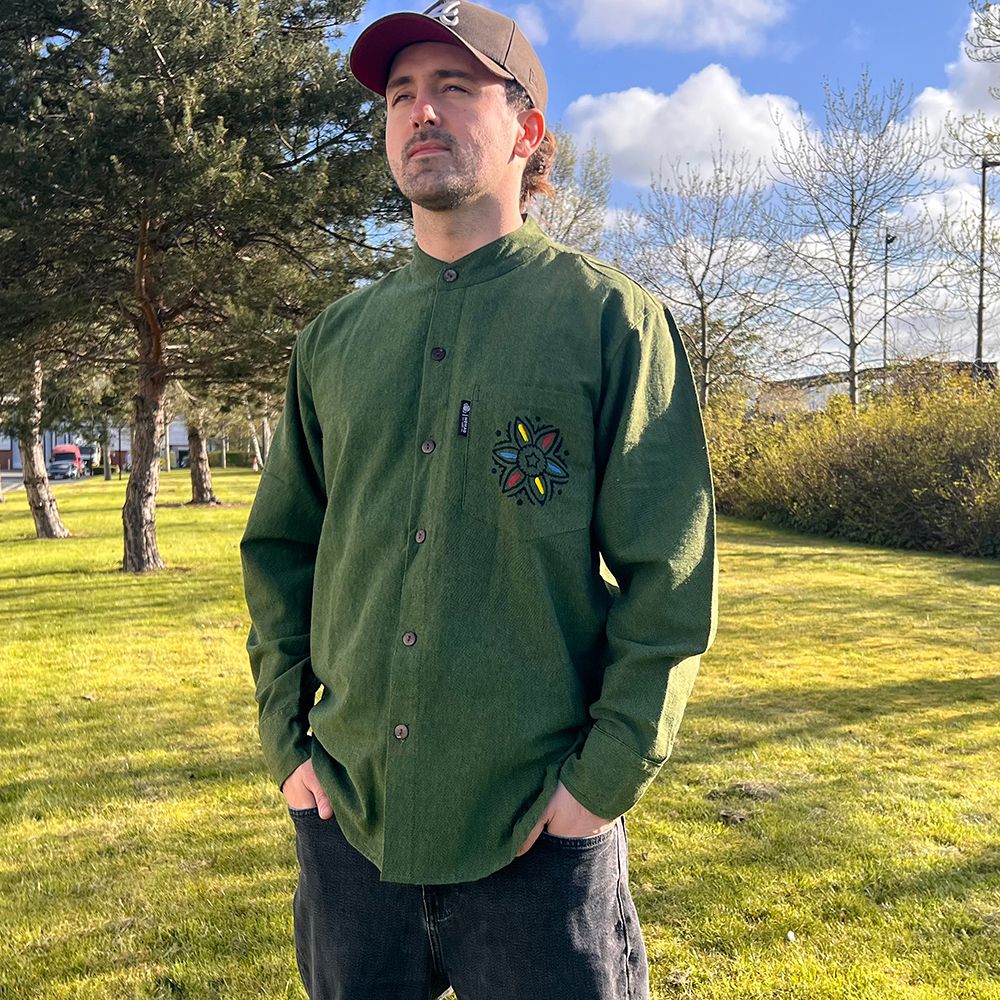
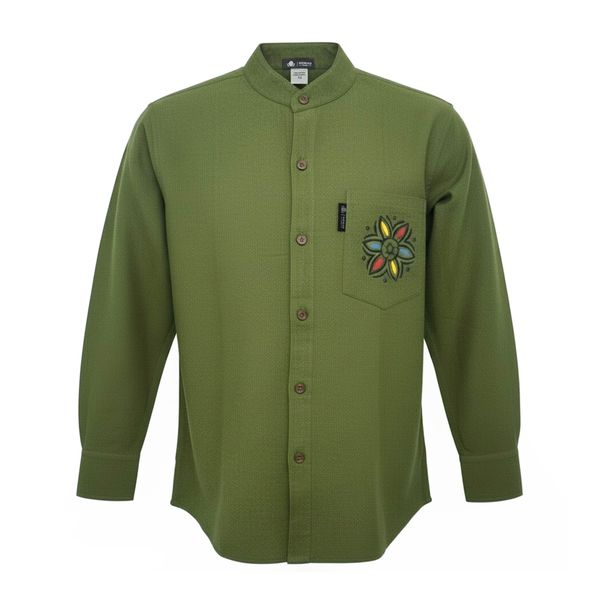
Look closely at some of the Kathmandu styles and there is another lovely touch: a small mandala hand-painted onto the shirt pocket. It is not a great shouting logo, but a quiet artisan signature.
The painted colours sit naturally with the shirt and can also pick up a complementary T-shirt worn beneath. Display one open over a carefully chosen tee and the whole layered look immediately makes sense.
Call it a grandad shirt, a Kathmandu shirt or a survivor of the old Hippie Trail. Those early travellers wanted clothing that was comfortable, individual and made with a human touch.
Apparently, customers still do.